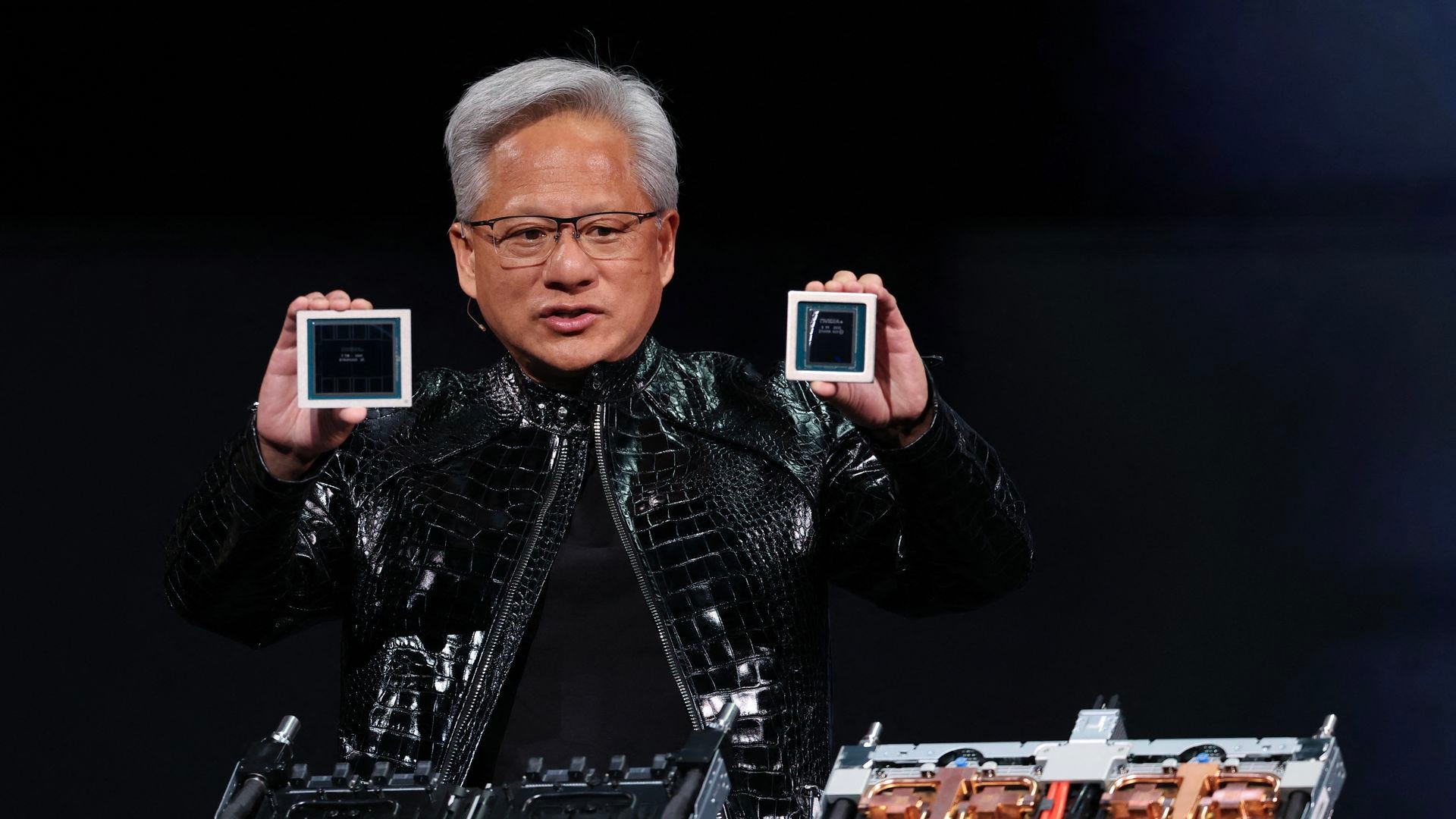
A lot was announced across its product lines, from Vera Rubin in full production to Alpaymayo 2 for self driving Nvidia tech for 80% of the world’s car makers, to Nvidia’s own humanoid GR00T Isaac powered robots to Cosmos 3 Physical World Models to Nemotron 3 Ultra open source LLMs from the company. And more. And I’ll have a lot to say about all of it in future AI-RTZ posts and AI Ramblings Daily (ARD) podcasts to come.
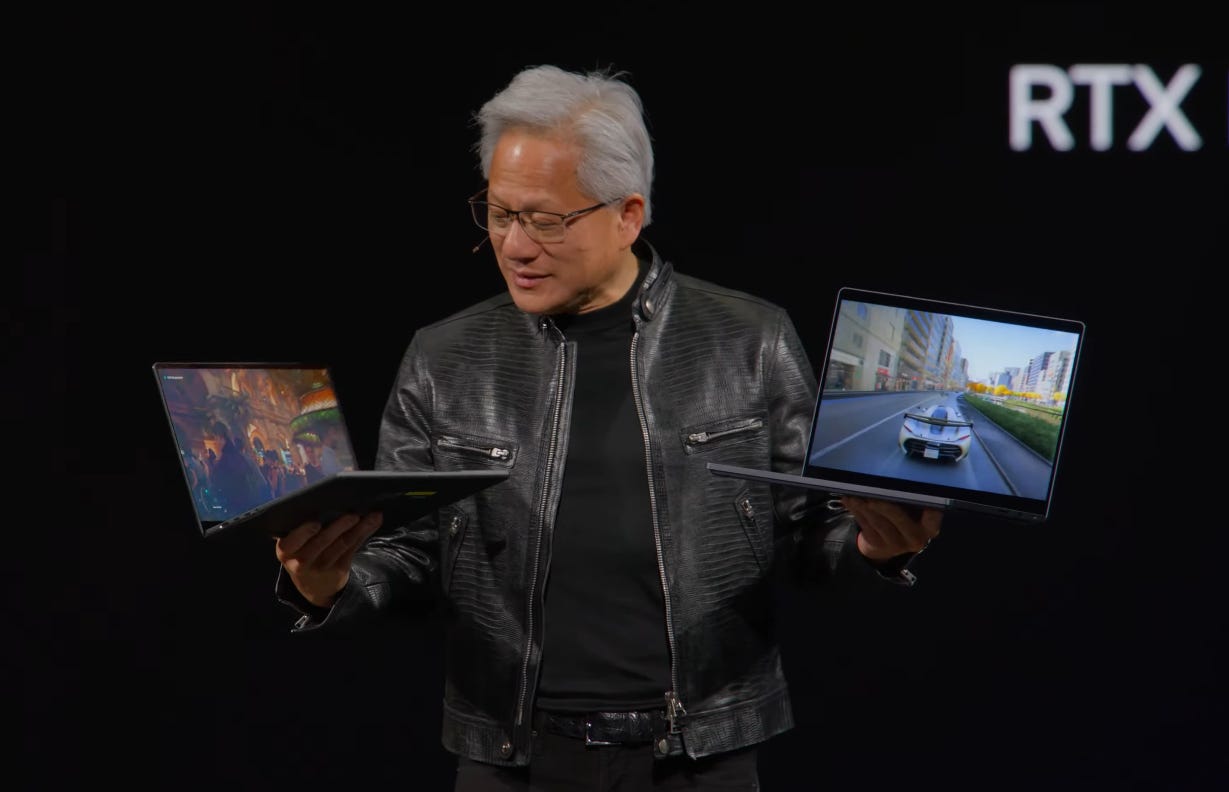
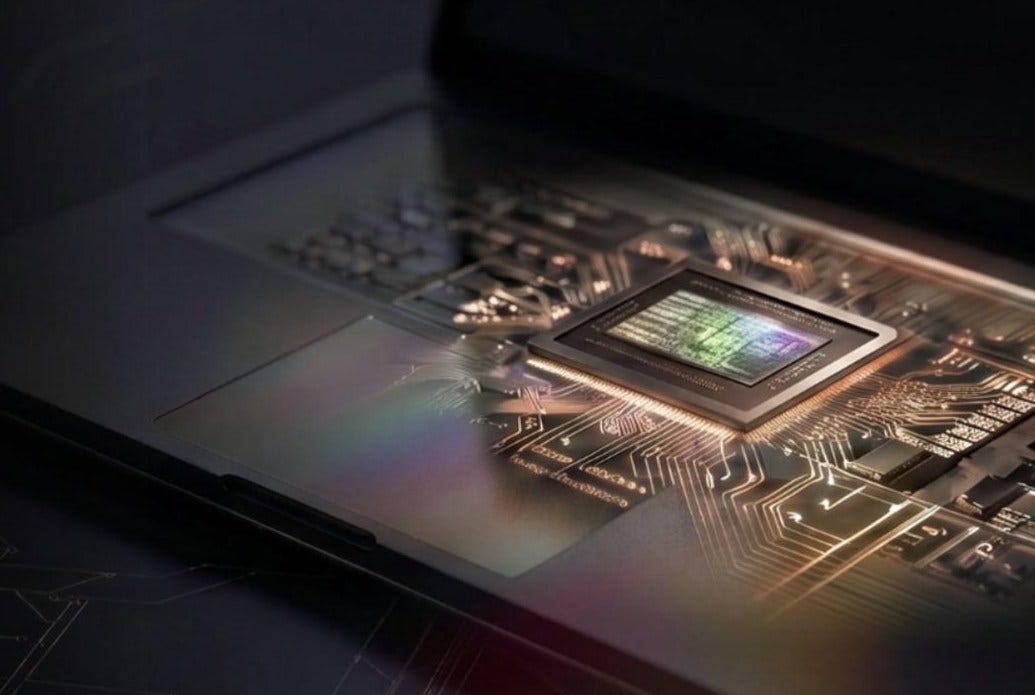
That means new products that bring in Microsoft and its myriad OEMs (original equipment manufacturers), that drive the multi-hundred billion PC/Laptop market globally. Nvidia is now offering local AI driven GPU/CPU processor systems that compete with Qualcomm, AMD, ARM and other chip/chip design companites.
“The company best known for powering the AI boom is coming for the PC: Nvidia is expected next week to debut the first Windows computers that use its chips as the main processor, sources confirm to Axios.”
“Why it matters: Microsoft’s first AI PC push stumbled, but Nvidia’s arrival gives it a second chance, this time with the world’s hottest chipmaker attached.”
Here’s what will be laid out at two computer conferences in Asia and the US this week.
“Driving the news: Nvidia and Microsoft will unveil their joint work and the first computers running the chips at two key industry conferences — the Computex trade show in Taiwan and Microsoft’s Build developer conference in San Francisco.”
“Nvidia-powered PCs are expected both from Microsoft’s homegrown Surface brand as well as other computer makers, including Dell, sources confirmed.”
“Microsoft is also expected to debut software that makes it easier for people to have AI agents do work locally on their Windows computer.”
This has been a long time Nvidia project, slowly being accelerated for a while.
“Catch-up quick: Nvidia, which got its start making PC graphics chips, has been working on entering the PC processor business for years now, though only recently has it become clear that the debut was imminent.”
“A new era of PC,” Nvidia teased in a Friday post on X, pointing to coordinates that match a location in Taiwan.”
“Meanwhile. Windows head Pavan Davuluri engaged in his own vagueposting. “Something new is coming for developers,” he said on X. “And no, it’s not a new OS version. See you at Build next week!”
“Flashback: Nvidia isn’t totally new to powering Windows devices.”
“There were some Nvidia-powered Surface tablets that ran Windows RT, a slimmed down version of Windows 8, back in 2012.”
“The big picture: The move comes as Microsoft is trying to reposition Windows to take advantage of the massive momentum behind AI.”
“Microsoft’s first effort at an AI PC, the Copilot+ PC, was marred by a series of setbacks, including a lengthy delay and security concerns over its signature feature, Recall.”
“However, the move toward agents that can automatically perform tasks on local PCs has provided what it sees as a fresh opening.”
“The company has been embracing OpenClaw since earlier this year, creating a new team led by veteran coder Omar Shahine. The company also has OpenClaw founder Peter Steinberger (now employed by OpenAI) scheduled to host a breakout session at Build.”
“Between the lines: While most AI work has been done in the cloud, Microsoft’s push to have things run locally could find newly receptive ears.”
“Businesses are starting to struggle with massive computing costs that have accompanied the shift from unlimited-use chatbots to agents, which can rack up giant bills as they do their autonomous work.”
“What they’re saying: Nvidia’s entry in the PC market could help not only it and Microsoft, but also rival Qualcomm, which uses a similar type of chip as Nvidia rather than the traditional PC chip architecture used by Intel and AMD.”
“From an industry perspective, it’s a good thing,” Carolina Milanesi, an analyst at Current Strategies, told Axios.”
“Milanesi said that Qualcomm has struggled to grab a significant chunk of the PC market despite offering excellent battery life, in part because developers and businesses didn’t see a need to focus scarce resources on a somewhat different version of Windows.”
“As for Nvidia, Milanesi said getting its new processor used in the data center is the bigger opportunity, but powering PCs could be a nice complement.”
A lot of this will depend on the devils in the details.
Nvidia’s strength is that it has always focused on the nooks and crannies of these details. Buried deep in the integration nuances of hardware and software. Just like Apple has been to date.
These are the new sets of opportunities in local AI this AI Tech Wave in this next phase.
Again, will have a lot more on Nvidia’s other announcements at its GTC conference in Taiwan as well in posts and podcasts ahead. Stay tuned.
(NOTE: The discussions here are for information purposes only, and not meant as investment advice at any time. Thanks for joining us here)