But memory chips as an increasingly scarce supply component to building AI hardware in our data centers and phones/PCs/local devices. A supply constraint as critical as AI GPUs were over the last three years and beyond. Now, as we enter the third year after OpenAI’s ChatGPT, memory supply and prices are a critical reality of life in 2026 in this AI Tech Wave.
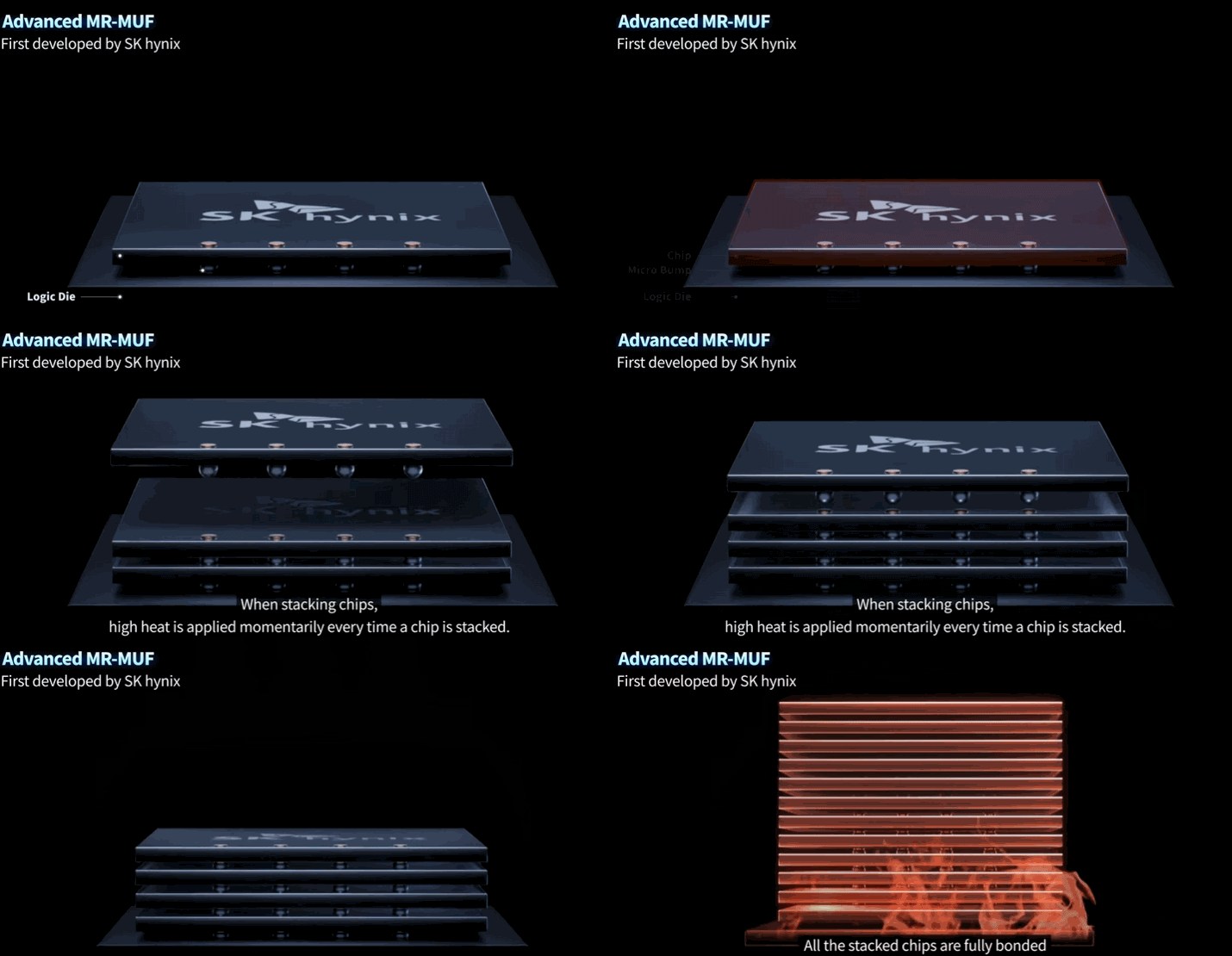
And it’s likely to be a major headwind into 2026 and beyond. Especially given that a handful companies, led by SK Hynix of South Korea, together account for over 90% of the world’s supply for the next few years.
The lead times to build more are measured in years, given the multi-billion factories (aka ‘fabs’) that need to be built.
“Once-cheap SSDs [solid state drives], DRAM [dynamic random access memory], and HDD [hard disk drive] prices are climbing fast as AI demand and constrained supply converge to create the tightest market in years.”
“Nearly every analyst firm and memory maker is now warning of looming NAND and DRAM shortages that will send SSD and memory prices skyrocketing over the coming months and years, with some even predicting a shortage that will last a decade.”
“The shortages are becoming impossible to ignore, and warnings from the industry are growing dire, as the voracious appetite of AI data centers begins to consume the lion’s share of the world’s memory and flash production capacity.”
“For the better part of two years, storage upgrades have been a rare bright spot for PC builders. SSD prices cratered to all-time lows in 2023, with high-performance NVMe drives selling for little more than the cost of a modest mechanical hard disk. DRAM followed a similar trajectory, dropping to price points not seen in nearly a decade. In 2024, the pendulum swung firmly in the other direction, with prices for both NAND flash and DRAM starting to climb.”
“The shift has its roots in the cyclical nature of memory manufacturing, but is amplified this time by the extraordinary demands of AI and hyperscalers. The result is a broad supply squeeze that touches every corner of the industry. From consumer SSDs and DDR4 kits to enterprise storage arrays and bulk HDD shipments, there's a singular throughline: costs are moving upward in a convergence that the market has not seen in years.”
Memory chip suppliers have been almost at the bottom of tech stack supply chains for decades, with vicious supply and demand cycles that are felt most by these companies and their investors.
“The downturn of 2022 and early 2023 left memory makers in dire straits. Both NAND and DRAM were selling below cost, and inventories piled up. Manufacturers responded with drastic output cuts to stem the bleeding. By the second half of 2023, those reductions had worked their way through to sales channels. NAND spot prices for 512Gb TLC parts, which had fallen to record lows, rose by more than 100% in the span of six months, and contract pricing followed.”
The piece goes on to describe the supply constraints in detail and is worth a full read.
“How OpenAI sent memory chip prices soaring, and how it may impact the wider tech sector and consumers.”
“The AI boom and the rush to build AI infrastructure have pushed the prices of computer hardware sharply upward. GPUs were already expensive, and now, thanks in large part to OpenAI, memory is becoming expensive too. OpenAI’s massive wafer deal with Samsung and SK hynix has effectively crashed the global DRAM market, triggering shortages that are rippling through the tech industry and pushing prices higher for everyone.”
And all this has direct implications for memory chip supply not just to data centers by to local consumer devices globally like PCs to smartphones and more. The Verge puts it pithily in “RAM is ruining everything”:
“Price hikes related to the memory shortage aren’t just coming for PC gamers; smartphones, laptops, and storage drives could soon get increases, too.”
“Memory suppliers just blew a hole in the PC gaming industry – and they’re about to do the same to everything else. For weeks, PC enthusiasts have borne the brunt of skyrocketing memory prices, but the shockwaves will soon impact a wider range of products as suppliers pour resources into a far bigger and more lucrative endeavor: AI.”
“The biggest names in the AI industry are buying up DRAM memory for their sprawling data centers, and memory makers are prioritizing their demands over everyone else’s. DRAM is embedded “in every part of our digital society today,” Jeff Janukowicz, research VP at IDC, tells The Verge. That’s everything from laptops to smartphones, gaming consoles, smart TVs, cars, and even small amounts in solid-state drives (SSDs). “There’s a lot at stake,” he says.”
“Budget-friendly smartphones and memory-hungry AI PCs might have higher price tags next year.”
“Your next smartphone or PC might cost more amid a global memory shortage that the International Data Corporation expects to “persist well into 2027.” A new report from the research firm lays out the potential impact of the RAM crunch, saying it “signals the end of an era of cheap, abundant memory and storage” — for now, at least.”
“The price of RAM has skyrocketed over the past few months as the world’s biggest memory makers — Micron, Samsung, and SK Hynix — allocate more resources for AI companies, which are buying up tons of memory for their massive data centers. Though PC gamers looking to upgrade their build’s RAM may have been the first to feel the impact of this crunch, it’s coming for other devices, too.”
More financial and technical details on all this are available in this WSJ and Semianalysis chip trade piece in particular, from over a year ago. Both are worth digesting for additional context on these memory chip headwinds ahead.
But the broader point is that memory chip prices are now denting mainstream affordability of locally AI enabled computers, laptops, smartphones and devices next year and beyond. Thus reducing the fruits of Moore’s Law consumers have benefited from for over three decades.
Higher prices for local hardware means postponement of wider availability of affordable devices to run cooler AI software and services. That likely goes well beyond 2026 and likely until the end of this decade. And that head wind is important to note in this AI Tech Wave. Up and down the tech stack below.
It’s a reality we’ve not had before in earlier tech waves. Especailly in conjunction with geopolitical trade and tariff headwinds that further curtail global tech supply chains.
And all of that in the mix means gale-force headwinds for the AI Tech Wave this time relative to all the others we’ve benefited from for decades. It potentially mutes mainstream AI demand and adoption by businesses and consumers ahead. Stay tuned.
(NOTE: The discussions here are for information purposes only, and not meant as investment advice at any time. Thanks for joining us here)